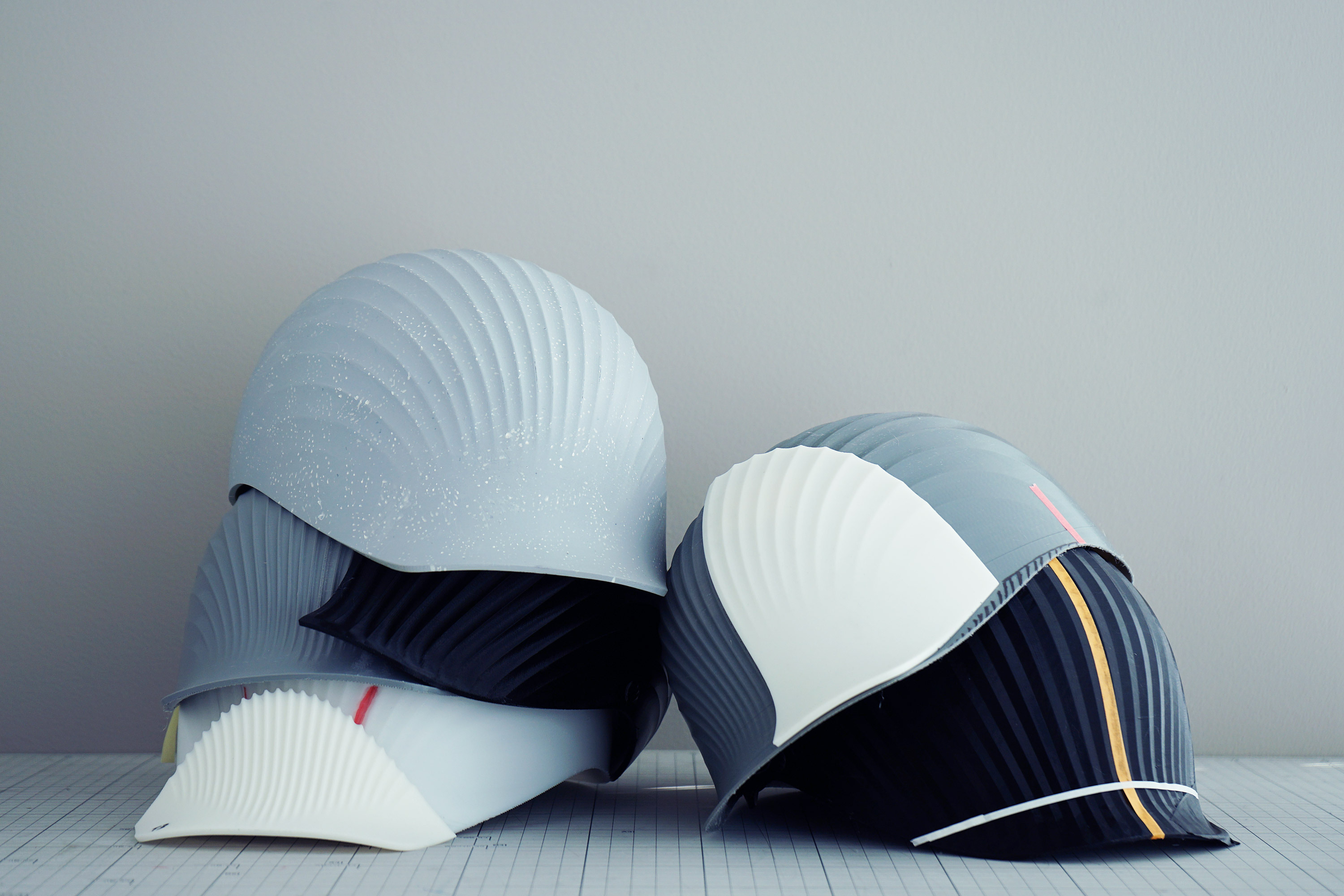
HOTAMET is a helmet made from discarded scallop shells. It is made of an eco-friendly plastic called Shellstic (Karastic in Japan), which is a new material made from scallop shells, and contributes to a reduction of up to approximately 36% of carbon dioxide compared to a product made from a 100% virgin plastic.
The product was developed in collaboration with Koushi Chemical Industries, Sarufutsu village in Hokkaido, and TBWA\HAKUHODO and quantum. MEDUM was in charge of the product design.
※The product will be sold under the name “SHELLMET” overseas.
Client
Koushi Chemical Industry Co., Ltd.
Year
2022
Category
Product Design
Photo
MEDUM
Client
Koushi Chemical Industry Co., Ltd.
Category
Product Design
Year
2022
Photo
MEDUM
The district of Soya, where the village of Sarufutsu in Hokkaido is located and is Japan’s largest scallop catch, generates 40,000 tons of shells annually as fishery product waste during the scallop processing process. In 2021, the export of these shells to other countries for reuse purposes would be discontinued, posing a social problem for the region in the form of environmental impact caused by storing shells on land and finding a place for them to be deposited. In the course of studying measures to solve this problem, we learned that the main constituent of scallop shells is calcium carbonate, and began development based on the idea that scallop shells could be reused to make a new material. By recognizing that scallop shells are also an important resource that supports the village, efforts to recycle scallop shells were initiated. The new material created as a result of these efforts is Shellstic. Inspired by the original role of the shells as a protection against foreign enemies, HOTAMET was born as a helmet using the Shellstic to protect the scallop fishermen who undertake the potentially dangerous task of scallop fishing. In recent years, the risk of natural disasters such as large earthquakes and extreme weather has increased, and this helmet is intended to be used not only by scallop fishermen and residents of Sarufutsu Village, but also as a helmet to protect oneself from natural disasters, regardless of occupation or region.
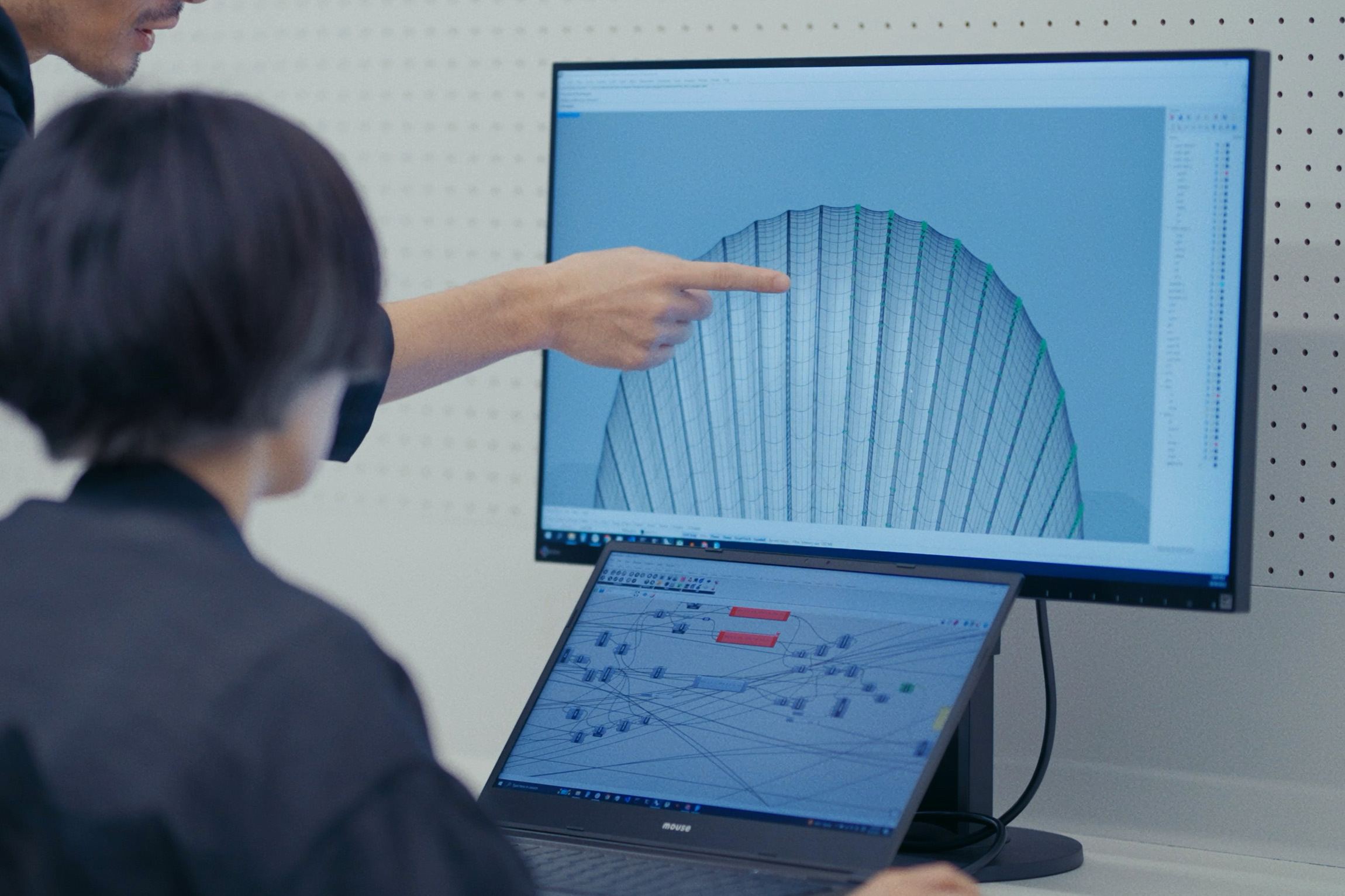
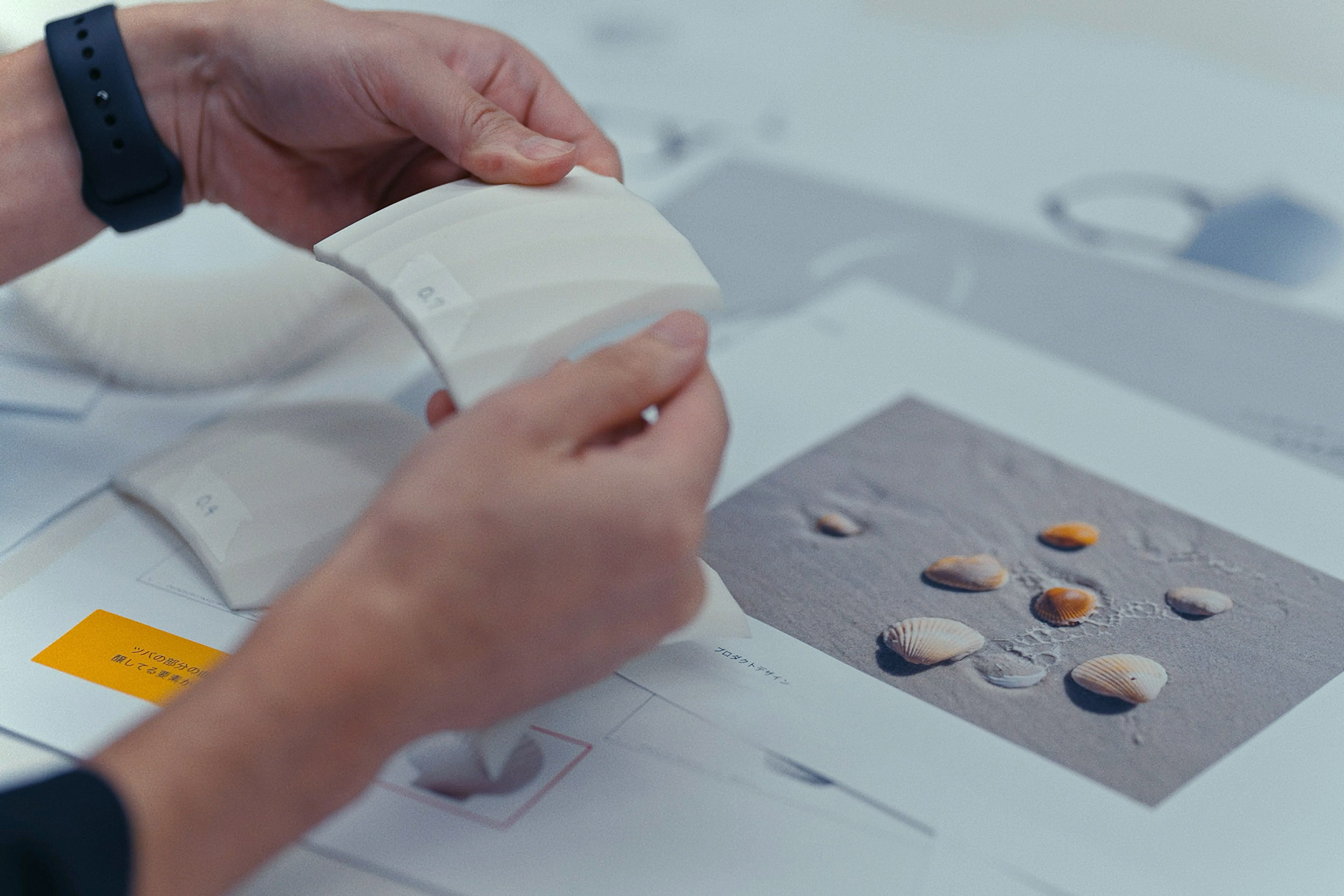
There are many designs in nature that have been optimized over many years. Applying the mechanisms of the natural world to technological development is called “Biomimicry”, combining the words “Bio” for organism and “Mimicry” for imitation. In the development of HOTAMET, based on this concept, a special rib structure that mimics the structure of a scallop shell, also used as a material, was incorporated into the design, successfully creating high strength with a small amount of material usage. From material development to design, we aimed to create a product with low environmental impact and sustainability in mind.
The lightweight, robust and simple design can be worn not only for disaster prevention, but also in various situations such as bicycle commuting and at workplace.